The Year of the Goat
- vanfamilyfit
- Nov 2, 2025
- 3 min read
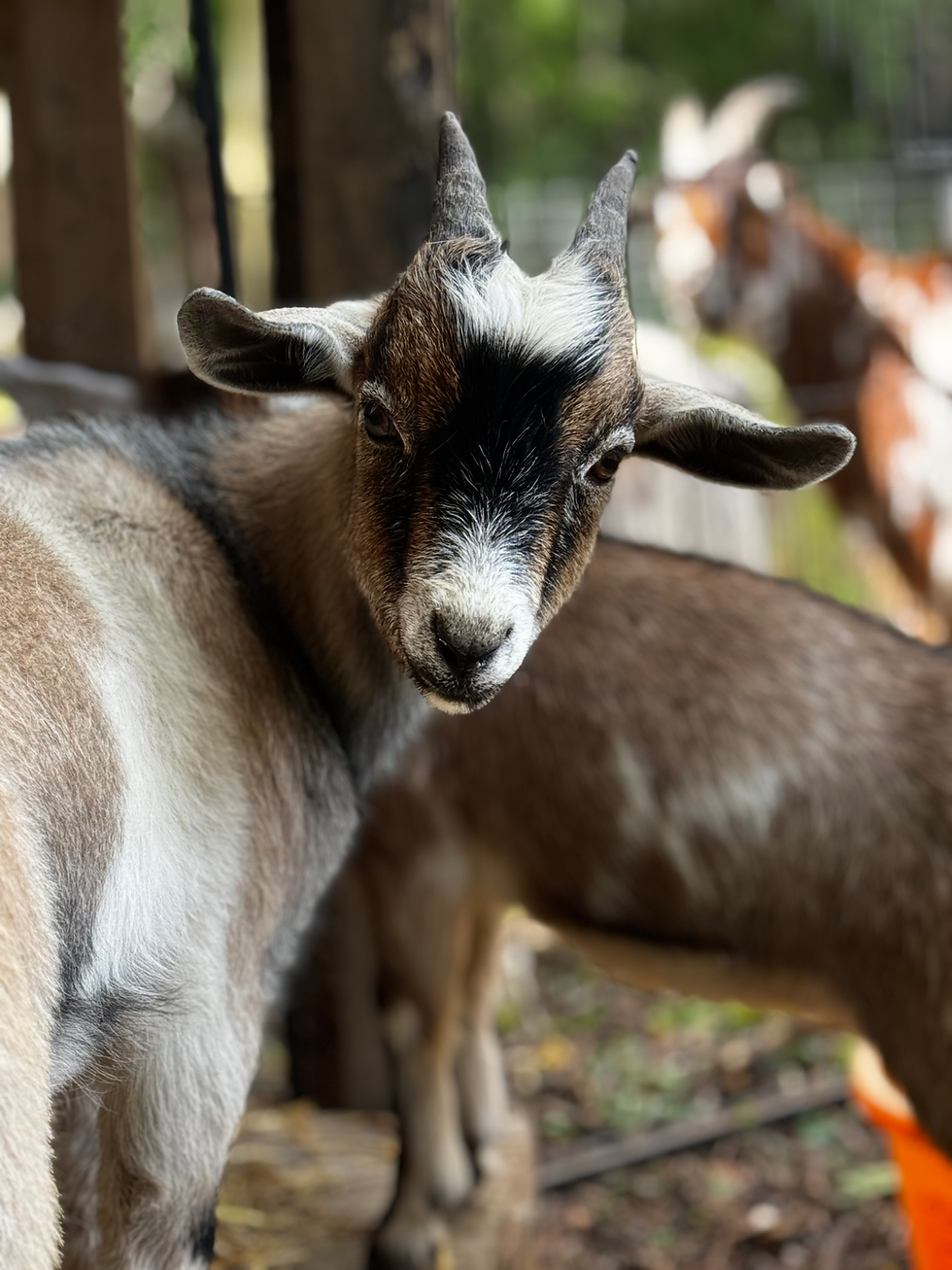
I know what you’re thinking — “Isn’t it the year of the dragon or something?” Maybe. But around here, it’s definitely the Year of the Goat.
The Year of the Goat: Van Acres Style
This summer, we welcomed eight new goats to the farm. And no, we weren’t looking. Not even a little bit. It just… happened.
You know how sometimes the stars align, and before you know it, your little grazing and birthday party operation has grown — all at once — and you somehow can’t say no? (Well, technically we could have… but we definitely weren’t going to.)
So, I thought I’d take a moment to share what really goes into adding new animals to our herd. Because it’s not as simple as seeing a cute goat online and saying, “Aww, bring ‘em home!”There’s actually a process — one that keeps both our existing herd and the newcomers safe and healthy.
Step 1: The Conversation
When we hear about goats needing a new home, the first thing we do is talk with their current owner.We ask a lot of questions — ages, health history, temperament — and the biggest one of all:“Why are you rehoming them?”
We never judge. Life happens, and goats (and sheep) are a lot of work. They’re fun and adorable, but they’re also demanding. On social media, we make it look easy — all sunshine, smiles, and goat selfies — but the truth is, spring and summer are the easy months.Winter? That’s a whole different story.
Vacations, for example, aren’t simple. You can’t just call a neighbor to “swing by and feed the goats.” Finding someone who knows how to care for them safely — even for a day — takes serious planning.
Step 2: The Visit
Next, we visit in person. Pictures don’t cut it. I need to see everything — eyes, coat, hooves, teeth, skin — and get hands-on to assess overall health. Because if something slips by, it could put our entire herd at risk. Goat illnesses spread fast, and one mistake can have devastating consequences.
During the visit, I also watch for temperament. We love friendly, curious goats who are comfortable with people. Especially since many of ours do birthday parties, public events, and educational programs, it’s important they’re calm, confident, and social.
And just as important, I like to meet the humans behind them — the people who’ve loved and cared for them. It tells me a lot about the animals’ upbringing and helps us ensure they’re coming from a healthy, positive environment.
Step 3: The Integration
Once we decide a goat (or in this case, eight) are joining the Van Acres crew, the real work begins at home.
We start with separation and supervision. When we brought home a mom and her two kids this summer, we kept them apart from our five youngsters already at home (the rest of the crew was out on grazing jobs). They could see and sniff each other through the fence but not interact — at least for the first day.
Once everyone seemed calm and curious (instead of nervous or territorial), we start supervised introductions. When the dust settles and everyone got comfortable, we slowly lessened the supervision. Integration takes patience. And a lot of extra time. But it’s worth it.
Step 4: The “No More Goats (For Now)” Rule
So here we are — 24 animals later. Happy, healthy, and (mostly) well-behaved. And while our hearts would adopt every goat on the planet if we could, we know it’s important to take only what we can truly handle.
These animals depend on us for everything — and that means making sure they’re not just surviving, but thriving. They need to bond, build their little herd family, and settle into the rhythm of life at Van Acres.
So yes, this may be “the Year of the Goat”… but I can confidently say it’ll be a long time before we add any more.(Unless, of course, fate intervenes again… because let’s be honest — when it comes to goats, resistance is futile.)


Comments